
ACS PUBLICATIONS INDUSTRY WEBINAR
Real-World High-Throughput Experimentation (HTE)
Bridging the Gap Between Automation & Chemical Insight
On Demand
Webinar Overview
In this webinar, Dr. Georg Wuitschik, Vera Jost, and Dr. Marius Lutz, HTE scientists at Roche, share a comprehensive approach to high-throughput experimentation (HTE) that extends beyond routine screening. They walk through what HTE can do and highlight pitfalls, and how AI in their lab turbocharges plate design and the work of chemists outside.
Additionally, statistical methods, like z-score analysis across 66,000 reactions, are shared to demonstrate how they help identify reactivity patterns essential for accelerating small molecule development.
- Aggregated HTE-sourced data provides uniform high-quality data that can be mined for general starting conditions and gives rise to practical "cheat sheets" for reaction condition selection
- HTE reduces implicit chemistry biases, enables data-driven decision making and accelerates drug discovery projects
- Purposeful use of AI empowers chemists to design and interrogate analytic data faster
Register to watch the recording.
SPEAKERS
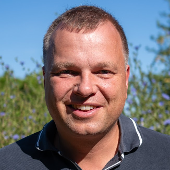
Georg Wuitschik
Senior Principal Scientist
Roche, RoSL HTE Lab, Switzerland
Dr. Georg Wuitschik has been with Roche since 2011, contributing across a range of process research roles and, for the past six years, helping build Roche’s HTE capabilities as part of Team RoSL alongside Vera Jost and Dr. Marius Lutz. An organic chemist at heart—but willing to write code when needed—Georg is also a husband and father to three children, with a fourth on the way.
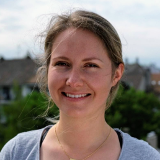
Vera Jost
Scientist
Roche, RoSL HTE Lab, Switzerland
Vera Jost began her journey at Roche in 2012 as an apprentice, followed by a nine-month rotation at Genentech in California. Since 2019, she has worked alongside Georg and Marius to build and continuously evolve the HTE lab from the ground up. Her passion lies in transforming complex automation technologies into seamless, user-friendly workflows that enable scientists to focus on the chemistry rather than the process.

Marius Lutz
Scientist
Roche, RoSL HTE Lab, Switzerland
Dr. Marius Lutz is a scientist in preclinical process research at Roche (Basel), where his team leverages HTE to accelerate the development of the company's preclinical small molecule portfolio. Marius’work focuses on integrating lab automation, programming, and streamlined data workflows to design and analyze automated reaction plates at scale.
AGENDA
05:00 CET
Welcome and Attendee Resources
ACS Publications Team
05:05 CET
From Request to Results: Best Practices and HTE Case Studies
Vera Jost
05:20 CET
Learning from Data: Z-Score Analysis of 66,000 Reactions
Dr. Marius Lutz
05:35 CET
What Have AI Agents Ever Done for HTE?
Dr. Georg Wuitschik
05:50 CET
Q&A
ACS Publications Team
FEATURED ARTICLES
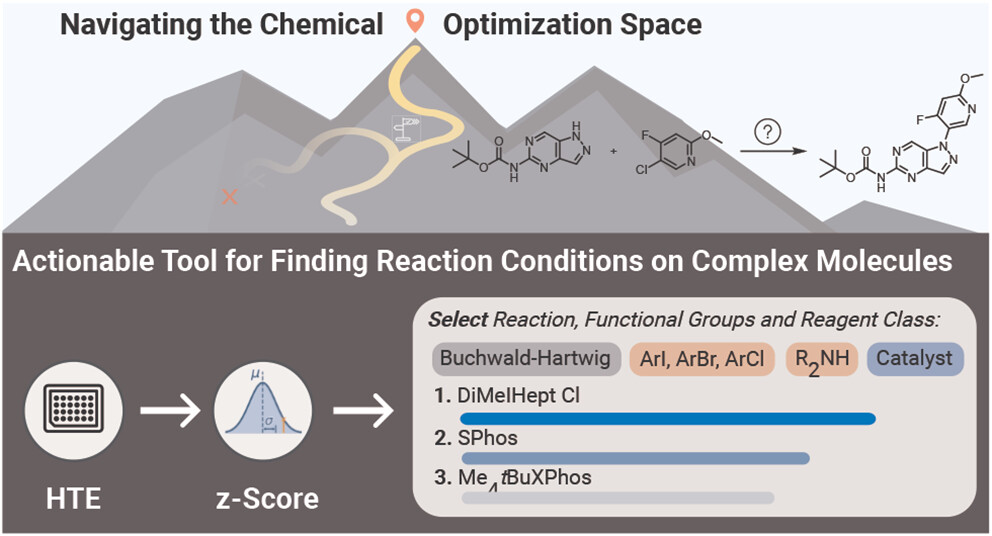
Research team at Roche introduces a robust statistical method using z-scores to analyze 66,000 internal HTE reactions on complex molecules. They publish the underlying data as well as a tool to analyze and draw actionable conclusions from this data set. They exemplify the power of this method for the widely employed Buchwald–Hartwig and Suzuki–Miyaura cross-coupling reactions. The results reveal optimal conditions that differ significantly from literature-based guidelines. These data-driven insights provide high-quality starting points for optimization campaigns, improving their overall efficiency. Read now.
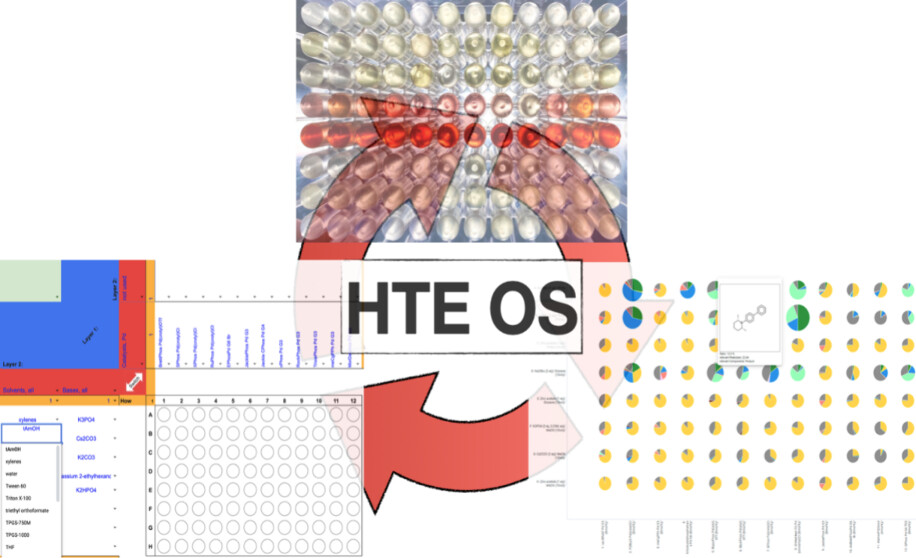
HTE OS is a free, open-source high-throughput experimentation workflow that supports practitioners from experiment submission all the way to results presentation. A core Google Sheet is responsible for reaction planning and execution as well as for communication with users and robots. All generated data are funneled into Spotfire where users analyze it. Tools for parsing of LCMS data and translation of chemical identifiers provide data-wrangling capabilities to complete the workflow. Read Now.
Subscribe to ACS Industry Insiders
Sign up for ACS Industry Insiders to receive free, full-text access to five free articles monthly in the research areas that interest you. We handpick each article to bring you the most interesting and trending content.


Copyright © 2026 | American Chemical Society | 1155 Sixteenth Street NW | Washington, DC 20036